





Skip to content

Lessons Habitat

Lesson Plans & Teaching Resources for Educators

  • Home
  • Teaching Tips and Guides
  • Primary School Lesson Plans
  • Toggle search form
  • Primary 1 English Second Term Lesson Note | Phonics, Adjectives & Composition
    Primary 1 English Second Term Lesson Note | Phonics, Adjectives & Composition Primary 1 Scheme of Work
  • Rights of Citizens Vocational Aptitude Primary 1 Third Term Lesson Notes
    Rights of Citizens Vocational Aptitude Primary 1 Third Term Lesson Notes Primary School Lesson Plans
  • Common Diseases of Farm Animals & Their Prevention
    Common Diseases of Farm Animals & Their Prevention Primary School Lesson Plans
  • First Term Exam Vocational Aptitude Primary 1
    First Term Exam Vocational Aptitude Primary 1 Primary School Lesson Plans
  • Understanding Vocational Education and Its Examples For Primary 2
    Understanding Vocational Education and Its Examples For Primary 2 Primary School Lesson Plans
  • The Painter: Vocational Aptitude Lesson Note for Primary 1 Second Term
    The Painter: Vocational Aptitude Lesson Note for Primary 1 Second Term Primary School Lesson Plans
  • Filling the Gap from 1 to 70 | Primary 1 Second Term Maths Lesson Note
    Filling the Gap from 1 to 70 | Primary 1 Second Term Maths Lesson Note Primary 1 Scheme of Work
  • Rearing Farm Animals: Methods, Importance, and Systems Explained
    Rearing Farm Animals: Methods, Importance, and Systems Explained Primary School Lesson Plans
Crop Production Quiz for Primary 5 | Agricultural Science Week 2

Crop Production Quiz for Primary 5 | Agricultural Science Week 2

Posted on 04/06/202504/06/2025 By LessonsHabitat No Comments on Crop Production Quiz for Primary 5 | Agricultural Science Week 2

Table of Contents

Toggle
  • Captivating Introduction (Set the Stage with Story & Strategy)
  • Subject: Agricultural Science
    • ✅ Lesson Objectives
    • Keywords
    • Previous Knowledge (Entry Behavior)
    • Set Induction (Trigger Thought)
    • Lesson Development
      • A. Meaning of Crop Production
      • B. Types of Crops
      • C. Classification of Crops
        • 1. Based on Use:
        • 2. Based on Life Cycle:
        • 3. Based on Morphology:
    • Teacher-Pupil Activities
    • Evaluation Questions
    • Assignment
    • Internal Links for Lessonshabitat.com
    • Meta Description (SEO)
  • Engaging Conclusion (Reinforce with Realism & Purpose)
  • 10 FAQs (Frequently Asked Questions – SEO-Friendly & Parent-Aware)
  • 10 Evaluation Questions (Cognitive + Reflective – Based on Bloom’s Taxonomy)
  • 10 Evaluation Questions (Cognitive + Reflective – Based on Bloom’s Taxonomy)
  • ‍ Crop Production Quiz for Primary 5 – Test Your Farming Knowledge!
    • Take This Quick Quiz – Choose the Correct Answer (a, b, c or d)
    • ✅ Want the Answers? Scroll Down or Try First and Compare!
    • Answers to the Quiz
    • ‍♀️ Related FAQs for Parents & Pupils
    • ✍ Learn More from Lessons Habitat:
    • Let’s Hear From You!
    • Related posts:

Captivating Introduction (Set the Stage with Story & Strategy)

“Pupils, let me take you to a quiet farm in Ilorin…
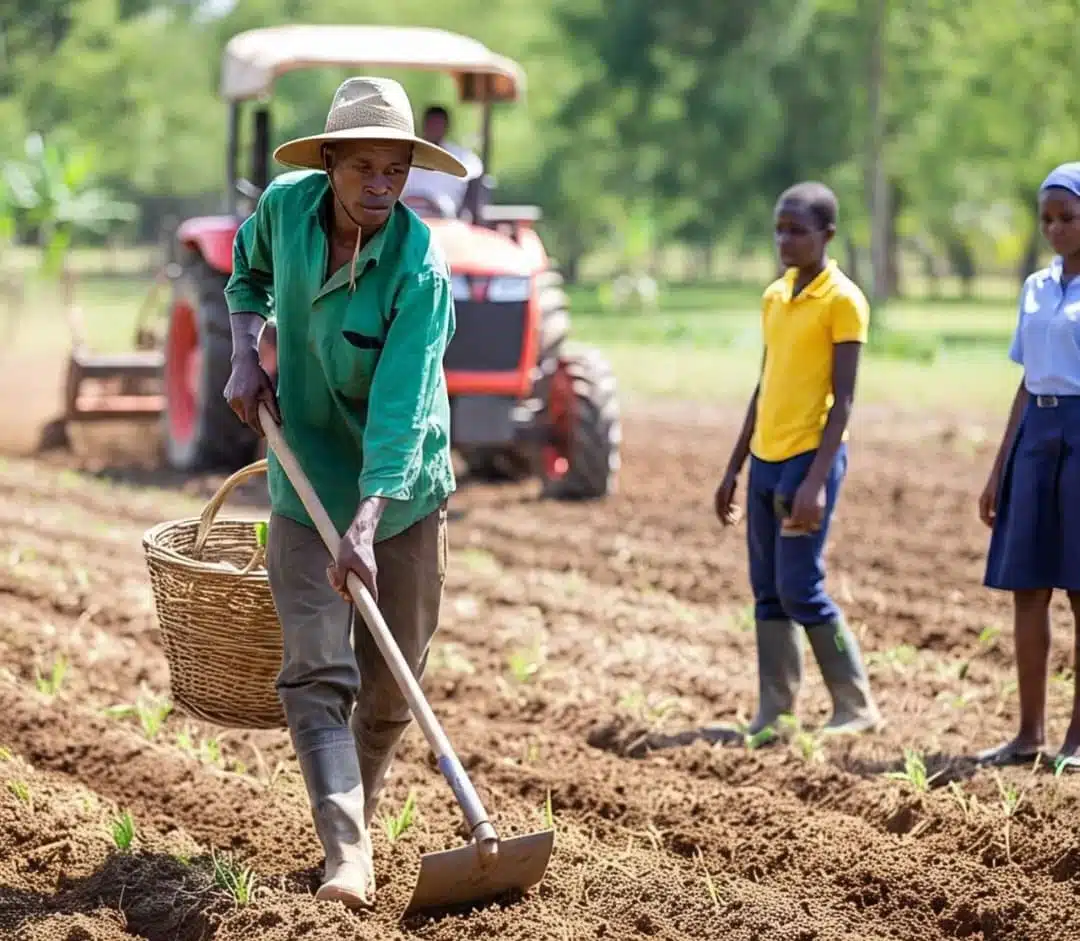
The early sun kisses the soil. A woman in her wrapper bends low, planting maize seeds with her bare hands. Her little son asks, ‘Mummy, why are we always growing things?’ She smiles, wipes sweat from her brow, and says, ‘Because everything we eat begins here.’

This week, we uncover the secret life of crops—what they are, how they grow, and why they matter in every home, every kitchen, and every market stall in Nigeria.

From the sweet tubers of yam in the East, to the golden stalks of maize in the North, to the pepper gardens behind your grandmother’s kitchen—we are surrounded by crop production.

But how much do you really know about these silent providers?

This lesson will awaken your eyes to the world beneath your feet. You’ll learn the types of crops, why some plants live for a season while others last for years, and how every leaf, fruit, or root tells a story of survival, science, and service.”

Subject: Agricultural Science

Class: Primary 5
Term: First Term
Week: 2
Duration: 40 minutes
Topic: Crop Production


✅ Lesson Objectives

By the end of this lesson, pupils should be able to:

  1. Define crop production in their own words.

  2. Mention at least 4 types of crops (e.g., cereals, legumes, tubers, vegetables).

  3. Classify crops based on:

    • Their use (food, medicinal, industrial)

    • Their life cycle (annual, biennial, perennial)

    • Their morphology (root crops, leaf crops, fruit crops)


Keywords

  • Crop

  • Production

  • Annual

  • Biennial

  • Perennial

  • Morphology


Previous Knowledge (Entry Behavior)

Pupils already know examples of farm crops like yam, maize, beans, and tomatoes.


Set Induction (Trigger Thought)

Ask:

“If Mama Nkechi grows pepper, okra, and maize in her backyard to sell at the market, what is she doing?”

Let them respond with guesses. Lead into:
“That is crop production—growing crops to feed people and make money.”


Lesson Development

A. Meaning of Crop Production

Crop production is the process of growing crops (like maize, yam, rice, etc.) for food, sale, or industrial use.

It includes planting, watering, weeding, harvesting, and storage.

B. Types of Crops

  1. Cereals – maize, rice, millet

  2. Legumes – beans, groundnut, soybeans

  3. Tubers – yam, cassava, sweet potatoes

  4. Vegetables – okra, spinach, pumpkin

  5. Fruits – orange, mango, banana


C. Classification of Crops

1. Based on Use:
  • Food Crops – yam, rice, maize Crop Production Quiz for Primary 5 | Agricultural Science Week 2

  • Medicinal Crops – bitter leaf, aloe vera

  • Industrial Crops – cotton (for clothes), cocoa (for chocolate), rubber

2. Based on Life Cycle:
  • Annual Crops – complete life cycle in one season (e.g., maize, okra)

  • Biennial Crops – grow in two seasons (e.g., carrot, beetroot)

  • Perennial Crops – live for many years (e.g., cocoa, mango)

3. Based on Morphology:
  • Root Crops – cassava, carrot

  • Leafy Crops – spinach, ugu

  • Fruit Crops – tomato, pawpaw Crop Production Quiz for Primary 5 | Agricultural Science Week 2


Teacher-Pupil Activities

Teacher Activities Pupil Activities
Explains crop production using real farm tools or images Observe and ask questions
Asks pupils to name types of crops they eat at home List out various crops
Draws a classification chart on the board Copy and explain the chart

Evaluation Questions

  1. What is crop production?

  2. Mention two types of crops.

  3. Give one example each of:

    • A food crop

    • A medicinal crop

    • An industrial crop

  4. What is a biennial crop?

  5. Mention one root crop and one fruit crop.


Assignment

Draw and label a chart that classifies crops into:

  • Food / Medicinal / Industrial

  • Annual / Biennial / Perennial

  • Root / Leaf / Fruit crops


Internal Links for Lessonshabitat.com

  • Primary 5 Agricultural Science Lesson Notes – Full Term

  • Farming Tools and Their Uses – Week 1 Lesson

  • Types of Soil – Coming in Week 3

  • Teaching Tips for Primary Science Teachers


Meta Description (SEO)

Teach your Primary 5 pupils the meaning of crop production, crop types, and classifications using real-life Nigerian examples. Curriculum-based and teacher-ready.


Engaging Conclusion (Reinforce with Realism & Purpose)

“So class, next time you see a tomato or a cassava root, don’t just think of food—think of the work behind it. Think of the science that helps it grow. Think of the farmer’s wisdom, the changing seasons, and the choices we make that begin with the soil.

Whether it’s the legume in your lunch or the fruit in your snack pack, every crop has a role. Some heal. Some feed. Some build industries.

And now you know how to classify crops—not just by their names, but by their purpose, life span, and body parts.

You, my dear learners, are future farmers, scientists, and food heroes. Let this knowledge grow inside you like a well-planted seed—ready to bloom when Nigeria needs you most.”


✍ 10 Fill-in-the-Blank Questions with Options (Objective Style – MCQs)

Instruction: Choose the correct answer from the options a, b, c, or d to complete each sentence.

  1. Crop production is the act of ______ crops for food, sale, or industry.
    a) burning
    b) storing
    c) growing
    d) cooking
    ✅ Answer: c)

  2. ______ crops complete their life cycle in one season.
    a) Perennial
    b) Biennial
    c) Industrial
    d) Annual
    ✅ Answer: d)

  3. Cassava and yam are examples of ______ crops.
    a) leafy
    b) fruit
    c) root
    d) medicinal
    ✅ Answer: c)

  4. Bitter leaf and aloe vera are examples of ______ crops.
    a) fruit
    b) industrial
    c) food
    d) medicinal
    ✅ Answer: d)

  5. A crop that lives for many years is called a ______ crop.
    a) biennial
    b) perennial
    c) annual
    d) seasonal
    ✅ Answer: b)

  6. Maize and rice are types of ______.
    a) legumes
    b) fruits
    c) cereals
    d) roots
    ✅ Answer: c)

  7. The classification of crops by use includes food, medicinal, and ______ crops.
    a) poisonous
    b) seasonal
    c) industrial
    d) aquatic
    ✅ Answer: c)

  8. Tomato is classified as a ______ crop based on morphology.
    a) leaf
    b) fruit
    c) root
    d) tuber
    ✅ Answer: b)

  9. ______ crops grow and complete their life cycle in two seasons.
    a) Perennial
    b) Annual
    c) Biennial
    d) Tubers
    ✅ Answer: c)

  10. Okra, pumpkin, and spinach are all types of ______.
    a) cereals
    b) fruits
    c) legumes
    d) vegetables
    ✅ Answer: d)


10 FAQs (Frequently Asked Questions – SEO-Friendly & Parent-Aware)

  1. What is crop production in simple terms for kids?
    → It means planting and growing crops like maize, yam, or beans to feed people or make money.

  2. Why should pupils learn about crop production in Primary 5?
    → To understand where food comes from and how farming supports families and Nigeria’s economy.

  3. Is maize a cereal or a legume?
    → Maize is a cereal crop.

  4. How do we classify crops in Agricultural Science?
    → By their use, life cycle, and parts of the plant (morphology).

  5. What is the difference between annual and perennial crops?
    → Annuals grow for one season, while perennials last many years.

  6. Why is crop classification important?
    → It helps farmers choose the right crops for food, medicine, or business.

  7. What are examples of industrial crops in Nigeria?
    → Cocoa, cotton, and rubber.

  8. Is tomato a fruit or a vegetable in crop classification?
    → Tomato is classified as a fruit crop based on morphology.

  9. Can children grow crops at home?
    → Yes, even pupils can grow vegetables in small gardens or pots.

  10. How does this topic connect to real life in Nigeria?
    → Most of our food and income as a country comes from crop farming—this topic connects learning to survival.


10 Evaluation Questions (Cognitive + Reflective – Based on Bloom’s Taxonomy)

Knowledge/Recall:

  1. What is crop production?

  2. Name three types of crops.

  3. Mention one example of a medicinal crop.

Comprehension:
4. Why is maize called a cereal crop?
5. What happens in the life cycle of an annual crop?

Application:
6. Classify cassava based on morphology and life cycle.
7. If a farmer wants to make herbal medicine, which type of crop should he plant?

Analysis:
8. Compare a fruit crop and a root crop using examples.

Synthesis:
9. Create a mini-garden plan using one cereal, one legume, and one vegetable.

Evaluation:
10. Why do you think knowing about crops can help your family in the future?

10 Evaluation Questions (Cognitive + Reflective – Based on Bloom’s Taxonomy)

Knowledge/Recall:

  1. What is crop production?

  2. Name three types of crops.

  3. Mention one example of a medicinal crop.

Comprehension:
4. Why is maize called a cereal crop?
5. What happens in the life cycle of an annual crop?

Application:
6. Classify cassava based on morphology and life cycle.
7. If a farmer wants to make herbal medicine, which type of crop should he plant?

Analysis:
8. Compare a fruit crop and a root crop using examples.

Synthesis:
9. Create a mini-garden plan using one cereal, one legume, and one vegetable.

Evaluation:
10. Why do you think knowing about crops can help your family in the future?

‍ Crop Production Quiz for Primary 5 – Test Your Farming Knowledge!

Are you ready to dig deep into the soil of knowledge?
Let’s see how much you remember from our lesson on Crop Production—the roots, the leaves, the fruits… and everything in between!

Topic: Crop Production
Subject: Agricultural Science – Primary 5
Week 2 | First Term


Take This Quick Quiz – Choose the Correct Answer (a, b, c or d)

1. Crop production is the act of ______ crops for food, sale, or industry.
a) burning b) storing c) growing d) cooking

2. ______ crops complete their life cycle in one season.
a) Perennial b) Biennial c) Industrial d) Annual

3. Cassava and yam are examples of ______ crops.
a) leafy b) fruit c) root d) medicinal

4. Bitter leaf and aloe vera are examples of ______ crops.
a) fruit b) industrial c) food d) medicinal

5. A crop that lives for many years is called a ______ crop.
a) biennial b) perennial c) annual d) seasonal

6. Maize and rice are types of ______.
a) legumes b) fruits c) cereals d) roots

7. The classification of crops by use includes food, medicinal, and ______ crops.
a) poisonous b) seasonal c) industrial d) aquatic

8. Tomato is classified as a ______ crop based on morphology.
a) leaf b) fruit c) root d) tuber

9. ______ crops grow and complete their life cycle in two seasons.
a) Perennial b) Annual c) Biennial d) Tubers

10. Okra, pumpkin, and spinach are all types of ______.
a) cereals b) fruits c) legumes d) vegetables


✅ Want the Answers? Scroll Down or Try First and Compare!

Teachers’ Tip: Let your pupils try this quiz during revision, use it in class, or post it on your school WhatsApp group for practice.


Answers to the Quiz

  1. c) growing

  2. d) annual

  3. c) root

  4. d) medicinal

  5. b) perennial

  6. c) cereals

  7. c) industrial

  8. b) fruit

  9. c) biennial

  10. d) vegetables


‍♀️ Related FAQs for Parents & Pupils

  • Effects of Weeds on Farmers to Farmers Agricultural Science Primary 5

  • Agriculture for Kids: The Meaning, Types, and Why It Matters More Than Ever”


✍ Learn More from Lessons Habitat:

  • Primary 5 Agricultural Science Scheme of Work

  • Importance of Farming Vocational Aptitude Primary 1 Third Term

  • Best Ways to Manage Farm Animals (Feeding, Records, & Sanitation)


Let’s Hear From You!

Did you enjoy this quiz? Drop a comment below or share your score in class. Want more free resources?
Subscribe to our newsletter to get weekly lesson notes, quizzes, and tips!

✨ Lessonshabitat.com – Teaching for Today. Preparing for Tomorrow.
Share

Related posts:

  1. Procedures for Crop Production | Primary 5 Agricultural Science Week 3  
  2. Planting Activities for Primary 5 Pupils: Tools, Spacing, and School Farm
  3. Post-Planting Activities for Primary 5: Irrigation, Mulching, Thinning, Supplying & More
  4. Harvesting Activities for Primary 5 Pupils | Tools, Steps & Examples
  5. Primary 5 Agricultural Science Scheme of Work
Agricultural Science, Primary 5 Scheme of Work Tags:Agricultural Science Primary 5 Lesson Notes, Primary 5 Lesson Note

Post navigation

Previous Post: Primary 5 Agricultural Science Lesson Note First Term Review of Primary 4
Next Post: Procedures for Crop Production | Primary 5 Agricultural Science Week 3  

Related Posts

  • Meaning of Soil, How Soils Are Formed, and Factors of Soil Formation
    Meaning of Soil, How Soils Are Formed, and Factors of Soil Formation Agricultural Science
  • Social Studies Primary 6 First Term Examination Questions
    Social Studies Primary 6 First Term Examination Questions Primary 5 Scheme of Work
  • Primary 5 Agricultural Science Scheme of Work
    Primary 5 Agricultural Science Scheme of Work Agricultural Science
  • Harvesting Activities for Primary 5 Pupils | Tools, Steps & Examples
    Harvesting Activities for Primary 5 Pupils | Tools, Steps & Examples Agricultural Science
  • a man holding a body thermometer to a goat probably a vet doctor check farm animal diseases
    Vocational Education Quiz: Crafts, Farming & Blacksmithing Agricultural Science
  • My Country Composition for Primary 5
    My Country Composition for Primary 5 Primary 5 Scheme of Work

Leave a Reply Cancel reply

Your email address will not be published. Required fields are marked *

Top Posts

  • Harvesting Activities for Primary 5 Pupils | Tools, Steps & Examples
  • Understanding Vocational Education and Its Examples For Primary 2
  • First Term Exam Vocational Aptitude Primary 1
  • Primary 1 Vocational Aptitude Third Term Exam Questions | Weeks 2–11 Summary
  • Agriculture for Kids: The Meaning, Types, and Why It Matters More Than Ever”

Recent Posts

  • Counting Numbers 51–100 | Primary 1 Maths Lesson
  • Skip Counting and Filling Gaps with Subtraction – Primary 1 Lesson
  • Introduction to Addition of Numbers | Primary 1 Second Term Maths Lesson Note
  • Filling the Gap from 1 to 70 | Primary 1 Second Term Maths Lesson Note
  • Primary 1 English Studies Second Term Examination Questions | Lessonshabitat
  • About Us
  • Privacy Policy
  • Contact Us
  • Disclaimer
  • Terms and Conditions
  • FAQs
  • Understanding Vocational Education and Its Examples For Primary 2
    Understanding Vocational Education and Its Examples For Primary 2 Primary School Lesson Plans
  • Rights of Citizens Vocational Aptitude Primary 1 Third Term Lesson Notes
    Rights of Citizens Vocational Aptitude Primary 1 Third Term Lesson Notes Primary School Lesson Plans
  • The Silent Killers of School Growth: Recognize and Prevent the Hidden Threats to Your School's Success
    The Silent Killers of School Growth: Recognize and Prevent the Hidden Threats to Your School’s Success Teaching Tips and Guides
  • Revision of First Term Topics Vocational Aptitude Primary 1
    Revision of First Term Topics Vocational Aptitude Primary 1 Primary School Lesson Plans
  • Whole Numbers Lesson Plan for Primary 1 | Lessonshabitat Primary 1 Scheme of Work
  • Teacher
    Primary 6 Basic Science First Term Examination Questions Primary School Lesson Plans
  • Phonics Practice: Using His and Her – Synonyms, Antonyms & Homophones | Lessonshabitat
    Phonics Practice: Using His and Her – Synonyms, Antonyms & Homophones | Lessonshabitat Primary 1 Scheme of Work
  • Social Studies Primary 4 Lesson Note on Accidents
    Social Studies Primary 4 Lesson Note on Accidents Primary School Lesson Plans

Copyright © 2025 Lessons Habitat.

Powered by PressBook News WordPress theme

This website uses cookies to improve your experience. We'll assume you're ok with this, but you can opt-out if you wish. Read More

Decline Cookie Settings
Accept
Powered by WPLP Compliance Platform
Cookies are small text files that can be used by websites to make a user's experience more efficient. The law states that we can store cookies on your device if they are strictly necessary for the operation of this site. For all other types of cookies we need your permission. This site uses different types of cookies. Some cookies are placed by third party services that appear on our pages.
  • Necessary
    Always Active
    Necessary cookies help make a website usable by enabling basic functions like page navigation and access to secure areas of the website. The website cannot function properly without these cookies.

  • Marketing
    Marketing cookies are used to track visitors across websites. The intention is to display ads that are relevant and engaging for the individual user and thereby more valuable for publishers and third party advertisers.

  • Analytics
    Analytics cookies help website owners to understand how visitors interact with websites by collecting and reporting information anonymously.

  • Preferences
    Preference cookies enable a website to remember information that changes the way the website behaves or looks, like your preferred language or the region that you are in.

  • Unclassified
    Unclassified cookies are cookies that we are in the process of classifying, together with the providers of individual cookies.

Powered by WPLP Compliance Platform
Cookie Settings