


Skip to content

Lessons Habitat

Lesson Plans & Teaching Resources for Educators

  • About Us
  • Privacy Policy
  • Contact Us
  • Disclaimer
  • Terms and Conditions
  • FAQs
  • Toggle search form
  • Basic Science Primary 1 Exam Questions | Second Term Test
    Basic Science Primary 1 Exam Questions | Second Term Test Primary 1 Scheme of Work
  • Primary 1 Second Mid-Term Assessment | Basic Science and Technology
    Primary 1 Second Mid-Term Assessment | Basic Science and Technology Primary 1 Scheme of Work
  • Colour
    Phonics Practice: Using His and Her – Synonyms, Antonyms & Homophones | Lessonshabitat Primary 1 Scheme of Work
  • Mathematics Primary 1 Second Term Revision and Review | Week 11
    Mathematics Primary 1 Second Term Revision and Review | Week 11 Primary 1 Scheme of Work
  • Rights of Citizens Vocational Aptitude Primary 1 Third Term Lesson Notes
    Rights of Citizens Vocational Aptitude Primary 1 Third Term Lesson Notes Primary School Lesson Plans
  • Control of Weeds Agricultural Science Primary 5
    Control of Weeds Agricultural Science Primary 5 Primary School Lesson Plans
  • Meaning and Importance of History for Primary 4 Pupils
    Meaning and Importance of History for Primary 4 Pupils Primary 5 Scheme of Work
  • Colour
    Christian Religious Studies Scheme of Work Nursery 1 Third Term Primary School Lesson Plans
Harvesting Activities for Primary 5 Pupils | Tools, Steps & Examples

Harvesting Activities for Primary 5 Pupils | Tools, Steps & Examples

Posted on 07/07/202507/07/2025 By LessonsHabitat No Comments on Harvesting Activities for Primary 5 Pupils | Tools, Steps & Examples

Subject: Agricultural Science

Class: Primary 5

Term: Third Term

️ Week: 6

Age: 9–10 Years

Topic: Harvesting Activities

Subtopics: Tools for harvesting | Steps of harvesting | Time of harvest

Table of Contents

Toggle
  • Subject: Agricultural Science
  • Class: Primary 5
  • Term: Third Term
  • ️ Week: 6
  • Age: 9–10 Years
  • Topic: Harvesting Activities
  • ⏰ Duration: 40 minutes
    • Behavioral Objectives
    • Key Terms and Definitions
    • Set Induction (Warm-up Story & Pupil Reactions)
    • Entry Behavior
    • Learning Materials and Resources
    • Background Knowledge
    • Embedded Core Skills
  • Main Content: Harvesting in Simple Terms
    • Tools Used for Harvesting
    • Right Time to Harvest Crops
    • Classroom Case Study: Mama Ekaette the Market Woman
    • Class Discussion
    • Activity – Fill in the Blank (MCQ)
    • ️ Theory Questions
    • ‍ Teacher’s Role
    • Pupils’ Role
  • Classroom Notes (Primary 5 Agricultural Science – Week 6)
    • ‍ Topic: Harvesting Activities
    • Key Terms and Definitions
    • Examples of Crops and When to Harvest
    • Quick Summary
    • ✏️ Copy Work (for Pupils’ Notebooks)
    • Assessment
    • Conclusion (Warm, Reflective Ending)
    • SEO Content Block
    • Related posts:

⏰ Duration: 40 minutes


Behavioral Objectives

By the end of this lesson, pupils should be able to:

  1. Describe step-by-step how crops are harvested.

  2. Identify common tools used during harvesting.

  3. Recognize the best time to harvest different crops.


Key Terms and Definitions

Term Meaning
Harvesting The process of collecting ripe crops from the farm
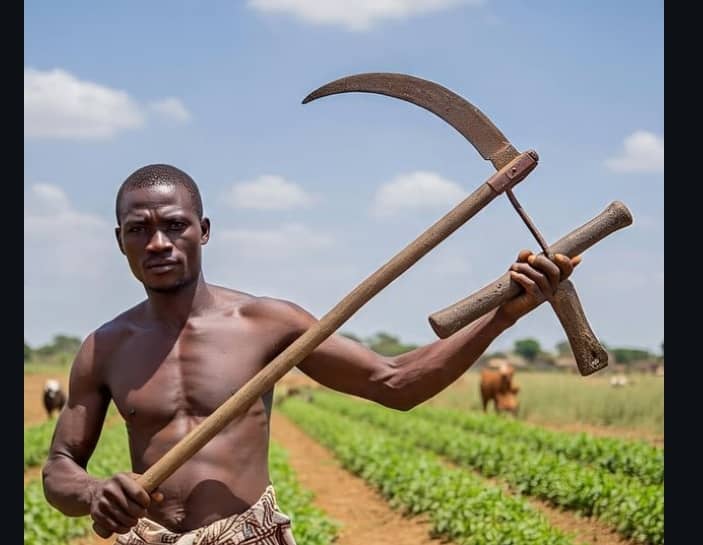
Sickle A sharp curved tool used to cut crops
Maturity The time when crops are ready for harvest
Basket A container used to carry harvested crops

Set Induction (Warm-up Story & Pupil Reactions)

Teacher: “Class, do you know what happened to Mama Ekaette’s garden last Saturday?”
Jide: “Maybe goats entered it!”
Adaora: “She went to harvest her ugu, ma!”
Teacher: “Correct! She woke up by 6am, tied her wrapper, grabbed her knife and basket, and harvested all her ripe vegetables before the sun came up. That’s what today’s lesson is all about—Harvesting Activities!”


Entry Behavior

Pupils have observed farmers or parents harvesting maize, cassava, vegetables, or fruits at home or in the community.


Learning Materials and Resources

  • Real sickle, knife, and basket

  • Picture chart of ripe and unripe crops

  • Short video or drawing of a local farm

  • Sample crops (cassava stick, maize cob, bunch of spinach)


Background Knowledge

Previously, pupils learned about post-planting activities like weeding, thinning, and fertilizing. Now it’s time to learn what comes after—harvest time!


Embedded Core Skills

  • Observation

  • Critical thinking

  • Fine motor skills

  • Cultural literacy

  • Communication


Main Content: Harvesting in Simple Terms

What is Harvesting?
Harvesting is the time we gather our crops from the farm when they are fully grown. It is a very important step because if we harvest too early or too late, we may lose food.


Tools Used for Harvesting

Tool What It Is Used For
Sickle Cutting rice, millet, and wheat
Knife Harvesting vegetables like ugu, okra
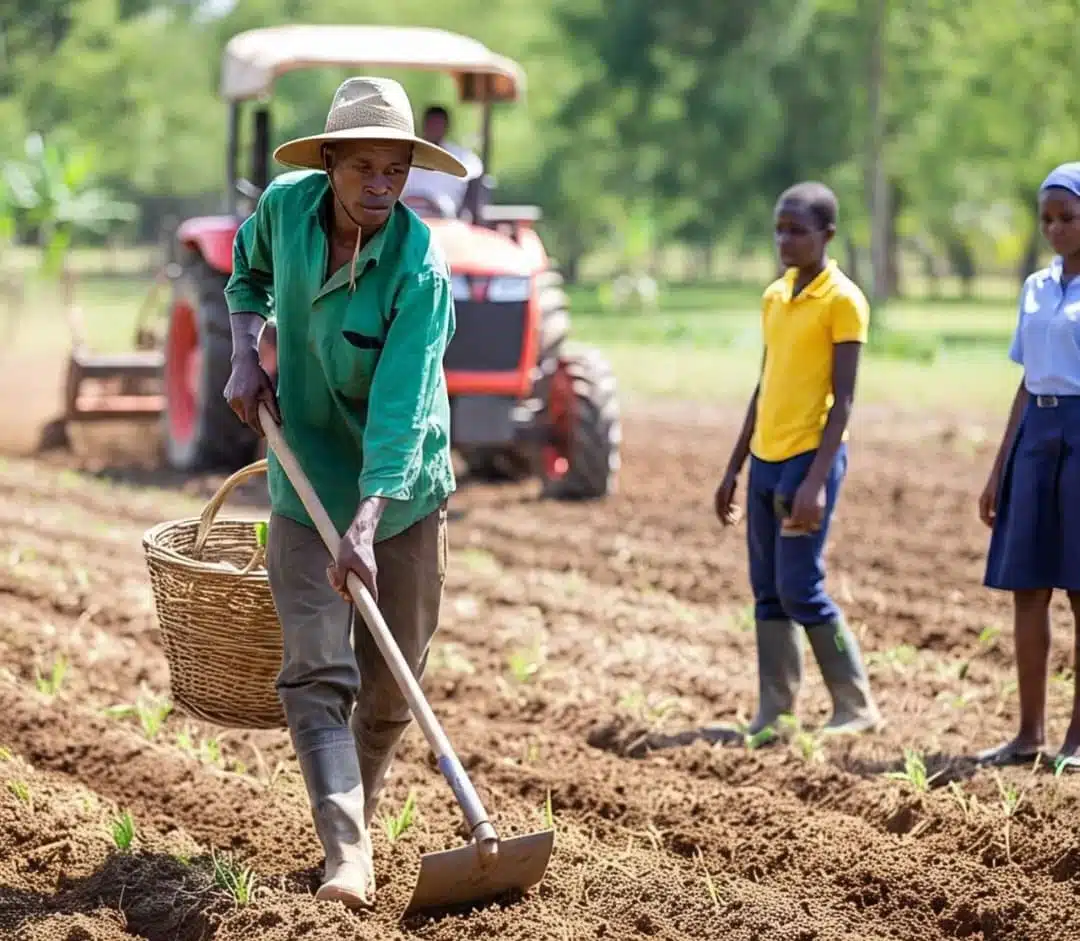
Hoe Digging up cassava, yam
Basket Carrying harvested crops
Cutlass Cutting plantain or palm fruits

Right Time to Harvest Crops

  • Maize: When the leaves are dry and the cobs are hard

  • Yam/Cassava: When leaves begin to yellow and fall

  • Tomatoes: When they are red and firm

  • Vegetables (Ugu, Soko): When they are fresh and leafy

  • Plantain/Banana: When the fruits are full and skin turns light green


Classroom Case Study: Mama Ekaette the Market Woman

Every Saturday morning, Mama Ekaette walks to her backyard farm with her daughter, Nneka. They check which vegetables are ready.
Mama says, “Nneka, look at this tomato. It is ripe. Pluck it gently with your fingers.”
They harvest with a basket and sell at Ita Faji Market in Lagos Island.
One day, Nneka harvested a tomato that was still green. Mama Ekaette smiled and said, “You see now? That’s not ready. Next time, wait till it’s red like my lipstick.”


Class Discussion

Teacher: “What tool would you use to harvest cassava?”
Pupil (Seyi): “Hoe, ma!”
Teacher: “Good! Can we harvest vegetables with a cutlass?”
Pupils: “Noooo ma!”
Teacher: “Why?”
Adaora: “Because it can cut the stem and spoil the whole farm!”


Activity – Fill in the Blank (MCQ)

Choose the correct answer.

  1. The tool used to cut rice is a __________.
    a. knife
    b. sickle ✅
    c. hoe
    d. cutlass

  2. Harvesting is done when crops are __________.
    a. growing
    b. still green
    c. ripe ✅
    d. planted

  3. A container used to carry harvested crops is a __________.
    a. basket ✅
    b. plate
    c. spoon
    d. stick


️ Theory Questions

  1. What is harvesting?

  2. Mention three tools used in harvesting.

  3. Describe how to know when cassava is ready for harvest.


‍ Teacher’s Role

  • Use real farm tools to demonstrate.

  • Ask guiding questions to check understanding.

  • Lead pupils in identifying ripe and unripe crops using pictures.

  • Supervise group role-play on harvesting vegetables.


Pupils’ Role

  • Observe and handle the tools carefully.

  • Answer questions based on experience.

  • Share what their parents or neighbors do during harvest.

  • Act out Mama Ekaette’s harvesting story.


Classroom Notes (Primary 5 Agricultural Science – Week 6)

‍ Topic: Harvesting Activities


Key Terms and Definitions

  1. Harvesting:
    This is the process of gathering ripe crops from the farm when they are ready.
    Example: We harvest maize when the cobs are dry and hard.

  2. Maturity:
    This means the time when a crop is fully grown and ready to be harvested.
    Example: Cassava matures when the leaves turn yellow and start falling.

  3. Sickle:
    A sickle is a curved sharp tool used for cutting crops like rice and wheat.
    Example: Farmers use sickles to harvest rice on the farm.

  4. Hoe:
    A hoe is a tool used for digging the ground and harvesting root crops like yam and cassava.
    Example: Uncle John used a hoe to dig up yam from the soil.

  5. Knife:
    A knife is a sharp tool used for cutting vegetables or soft crops during harvesting.
    Example: Adaora used a knife to cut ugu leaves for soup.

  6. Basket:
    A basket is a container made of straw or plastic used to carry harvested crops.
    Example: Mama Ekaette put tomatoes in a basket after harvesting.

  7. Cutlass:
    A cutlass is a big knife used to cut thick stems or trees like plantain or sugarcane.
    Example: Jide used a cutlass to cut down a bunch of ripe plantains.


Examples of Crops and When to Harvest

Crop When to Harvest
Maize When the husks are dry and cobs are hard
Cassava When leaves turn yellow and fall
Tomato When the fruit is red and full
Ugu (Fluted Pumpkin) When leaves are big, green, and fresh
Plantain When the fingers are full and light green in colour

Quick Summary

  • We harvest crops only when they are ripe.

  • Using the right tool for each crop makes harvesting easy and safe.

  • Harvesting too early or too late can spoil the crops.


✏️ Copy Work (for Pupils’ Notebooks)

Harvesting means collecting ripe crops from the farm.
We use tools like sickle, hoe, knife, and basket.
Maize is harvested when the cob is dry.
We use a hoe to dig out yam and cassava.
A knife is used to cut vegetables like ugu.
A basket helps us carry the crops after harvest.

Assessment

Oral: Pupils take turns naming crops and the tools used to harvest them.
Game: “Harvest Hunt” – Match tools to crops on the board.
Role-Play: Group act of Mama Ekaette’s garden story.


Conclusion (Warm, Reflective Ending)

“Harvest time is joy time! It’s the reward for all the hard work we’ve done on the farm.”
Just like Mama Ekaette and Nneka, when we harvest at the right time, we get fresh, healthy food to eat and even to sell.

So remember: farming is not just about planting. It’s about knowing when and how to harvest too!


SEO Content Block

  • SEO Title: Harvesting Activities for Primary 5 Pupils | Tools, Steps & Examples

  • Focus Key Phrase: Harvesting activities for Primary 5

  • Slug: /harvesting-activities-primary-5

  • Meta Description: Teach Primary 5 pupils about harvesting steps, tools like sickles and baskets, and when to harvest crops using real Nigerian examples and classroom storytelling.

  • Internal Links:

    • Post-Planting Activities for Primary 5: Irrigation, Mulching, Thinning, Supplying & More

    • Procedures for Crop Production | Primary 5 Agricultural Science Week 3  

    • Planting Activities for Primary 5 Pupils: Tools, Spacing, and School Farm

  • External Links:

    • NAERLS – Nigerian Agricultural Research Extension

    • FAO – How to Harvest Crops Properly

Share

Related posts:

  1. Crop Production Quiz for Primary 5 | Agricultural Science Week 2
  2. Procedures for Crop Production | Primary 5 Agricultural Science Week 3  
  3. Planting Activities for Primary 5 Pupils: Tools, Spacing, and School Farm
  4. Post-Planting Activities for Primary 5: Irrigation, Mulching, Thinning, Supplying & More
  5. Primary 5 Agricultural Science Scheme of Work
Agricultural Science, Primary 5 Scheme of Work Tags:Agricultural Science Primary 5 Lesson Notes, Primary 5 Lesson Note

Post navigation

Previous Post: Post-Planting Activities for Primary 5: Irrigation, Mulching, Thinning, Supplying & More
Next Post: Pollination, Fertilization, Budding, and Coloration

Related Posts

  • Notation of Numbers Primary 5 Lesson Note
    Notation of Numbers Primary 5 Lesson Note Primary 5 Scheme of Work
  • woman, brunette, face, hat, head, portrait, sun hat, young woman, hairstyle, curly hair, sun protection, fashion, model, modeling, woman, woman, woman, brunette, face, face, face, hat, hat, hat, hat, sun hat, sun hat, hairstyle, curly hair, sun protection, sun protection, sun protection, sun protection, sun protection, fashion
    Hat-Making Lesson Plan for Primary 5 | Meaning, Types & Materials Primary 5 Scheme of Work
  • History Primary 4 Lesson Notes – Colonial Administration in Nigeria
    History Primary 4 Lesson Notes – Colonial Administration in Nigeria Primary 5 Scheme of Work
  • A bright Nigerian classroom with happy pupils revising math with their teacher, colourful number charts and counting sticks on tables, cheerful atmosphere, realistic and child-friendly.
    Solving Equations With Fractions for JSS 3 | Lessonshabitat Primary 1 Scheme of Work
  • Crop Production Quiz for Primary 5 | Agricultural Science Week 2
    Crop Production Quiz for Primary 5 | Agricultural Science Week 2 Agricultural Science
  • Boring, driving, and measuring tools
    Boring, driving, and measuring tools Primary 5 Scheme of Work

Leave a Reply Cancel reply

Your email address will not be published. Required fields are marked *

Top Posts

  • Best Ways to Manage Farm Animals (Feeding, Records, & Sanitation)
  • Common Pests & Parasites of Farm Animals – Primary 5 Lesson
  • Systems of Rearing Farm Animals: Intensive, Extensive & Semi-Intensive
  • Weather Lesson for Primary 1 | Second Term Week 10 Basic Science
  • Common Diseases of Farm Animals & Their Prevention

Recent Posts

  • Primary 1 Third Term Examination Questions
  • JSS 3 Basic Technology Third Term Scheme of Work (Lagos State Curriculum)
  • THIRD TERM SCHEME OF WORK for JSS1, JSS2, and JSS3
  • Nursery 1 Civic Education Social Activities
  • Nursery 1 Civic Education Third Term Revision of Good Behaviour

Lessons Habitat

  • About Us
  • Privacy Policy
  • Contact Us
  • Disclaimer
  • Terms and Conditions
  • FAQs

Categories

Search

Search This Site

  • Understanding Vocational Education and Its Examples For Primary 2
    Understanding Vocational Education and Its Examples For Primary 2 Primary School Lesson Plans
  • What Are Weeds? Definition, Common Examples, and Weed Album for Primary 5
    What Are Weeds? Definition, Common Examples, and Weed Album for Primary 5 Primary School Lesson Plans
  • Representing Data Using Pie Chart – Mathematics Primary 5 First Term Lesson Note
    Representing Data Using Pie Chart – Mathematics Primary 5 First Term Lesson Note Mathematics
  • Colour
    Primary 1 Phonics Revision – English Studies Lesson Plan (Second Term) Primary 1 Scheme of Work
  • Colour
    Verbal Reasoning Quiz: Logic, Sound, Vowels & Patterns for Kids Primary School Lesson Plans
  • Colour
    Living Things Lesson Plan for Primary 1 | Lessonshabitat Primary 1 Scheme of Work
  • Mechanic Workshop – Primary 1 Vocational Aptitude Week 3 Lesson Notes
    Mechanic Workshop – Primary 1 Vocational Aptitude Week 3 Lesson Notes Primary School Lesson Plans
  • Introduction to Addition of Numbers | Primary 1 Second Term Maths Lesson Note
    Introduction to Addition of Numbers | Primary 1 Second Term Maths Lesson Note Primary 1 Scheme of Work

Copyright © 2026 Lessons Habitat.

Powered by PressBook News WordPress theme

This website uses cookies to improve your experience. We'll assume you're ok with this, but you can opt-out if you wish. Read More

Decline Cookie Settings
Accept
Powered by WPLP Compliance Platform
Cookies are small text files that can be used by websites to make a user's experience more efficient. The law states that we can store cookies on your device if they are strictly necessary for the operation of this site. For all other types of cookies we need your permission. This site uses different types of cookies. Some cookies are placed by third party services that appear on our pages.
  • Necessary
    Always Active
    Necessary cookies help make a website usable by enabling basic functions like page navigation and access to secure areas of the website. The website cannot function properly without these cookies.

  • Marketing
    Marketing cookies are used to track visitors across websites. The intention is to display ads that are relevant and engaging for the individual user and thereby more valuable for publishers and third party advertisers.

  • Analytics
    Analytics cookies help website owners to understand how visitors interact with websites by collecting and reporting information anonymously.

  • Preferences
    Preference cookies enable a website to remember information that changes the way the website behaves or looks, like your preferred language or the region that you are in.

  • Unclassified
    Unclassified cookies are cookies that we are in the process of classifying, together with the providers of individual cookies.

Powered by WPLP Compliance Platform
Cookie Settings