




Skip to content

Lessons Habitat

Lesson Plans & Teaching Resources for Educators

  • About Us
  • Privacy Policy
  • Contact Us
  • Disclaimer
  • Terms and Conditions
  • FAQs
  • Toggle search form
  • Colour
    Primary 1 English Studies Week 11 Revision | Second Term Review Primary 1 Scheme of Work
  • A bright Nigerian classroom with happy pupils revising math with their teacher, colourful number charts and counting sticks on tables, cheerful atmosphere, realistic and child-friendly.
    Solving Equations With Fractions for JSS 3 | Lessonshabitat Primary 1 Scheme of Work
  • Social Studies Primary 6 First Term Examination Questions
    Social Studies Primary 6 First Term Examination Questions Primary 5 Scheme of Work
  • Colour
    Verbal Reasoning Quiz: Logic, Sound, Vowels & Patterns for Kids Primary School Lesson Plans
  • Common Diseases of Farm Animals
    Common Diseases of Farm Animals Primary School Lesson Plans
  • Common Diseases of Farm Animals & Their Prevention
    Common Diseases of Farm Animals & Their Prevention Primary School Lesson Plans
  • Procedures for Rearing Farm Animals
    Procedures for Rearing Farm Animals Primary School Lesson Plans
  • Home Furniture for Kids: Names and Simple Uses Explained
    Home Furniture for Kids: Names and Simple Uses Explained Primary School Lesson Plans
Places of Religious Worship in Nigeria – A Cultural Guide for Primary 1

Places of Religious Worship in Nigeria – A Cultural Guide for Primary 1

Posted on 22/04/2025 By LessonsHabitat No Comments on Places of Religious Worship in Nigeria – A Cultural Guide for Primary 1

Places of Religious Worship in Nigeria – A Cultural Classroom Guide for Primary 1

SUBJECT: Vocational Aptitude

CLASS: Primary 1

TERM: Third Term

WEEK: Week 8

TOPIC: Places of Religious Worship in Nigeria

DURATION: 40 minutes

AGE: 6-7 years


Learning Objectives for Young Nigerian Minds

Behavioral Objectives

By the end of this lesson, students should be able to:

Table of Contents

Toggle
  • Places of Religious Worship in Nigeria – A Cultural Classroom Guide for Primary 1
      • SUBJECT: Vocational Aptitude
      • CLASS: Primary 1
      • TERM: Third Term
      • WEEK: Week 8
      • TOPIC: Places of Religious Worship in Nigeria
      • DURATION: 40 minutes
      • AGE: 6-7 years
    • Learning Objectives for Young Nigerian Minds
      • Behavioral Objectives
    • Key Terms to Know
      • Key Vocabulary
      • Learning Materials
    • Introduction: When Faith Lives in Every Street Corner
      • Set Induction
      • Main Presentation of the Lesson
        • Step 1: Revisiting the Previous Topic
        • Step 2: Introducing Places of Worship
    • MAIN CONTENT: PLACES OF RELIGIOUS WORSHIP IN NIGERIA
        • Step 3: Learner Contributions
      • Classroom Activities
      • Teacher’s Activities
      • Learners’ Activities
      • Assessment
    • PART A: Evaluation Fill-in-the-Blank Questions 
      • Frequently Asked Questions (FAQs)
      • Conclusion
      • More Primary 1 Lesson Plans You’ll Love
      • Call to Action (CTA):
      • Related posts:
  1. Identify and name different places of worship in Nigeria.

  2. Understand the importance of each place of worship to the people who use them.

  3. Describe the different religious practices that take place in churches, mosques, and shrines.

  4. Appreciate and respect the diverse religious beliefs in Nigeria.

  5. Share their personal experiences related to places of worship in their communities.


Key Terms to Know

Key Vocabulary

  • Religion

  • Worship

  • Church

  • Mosque

  • Shrine

  • Temple

  • Faith


Learning Materials

  • Pictures of churches, mosques, and shrines.

  • A Bible, Qur’an, and traditional items for illustration.

  • Whiteboard or chart paper for drawing and writing.

  • Real-life stories and experiences from the teacher’s own community.


Introduction: When Faith Lives in Every Street Corner

Set Induction

Imagine walking down your street early on a Sunday morning. You see your neighbor, Mrs. Adebayo, all dressed up in white, walking to church with her family. A little further, you spot Uncle Musa sweeping the mosque steps. And by the corner, you can hear the chanting from Baba Ifa’s shrine. This is Nigeria, where places of worship bring people together—no matter their religion.

Teacher’s Question:
“Why do you think people go to different places to worship?”


Main Presentation of the Lesson

Step 1: Revisiting the Previous Topic

The teacher starts by reviewing what students learned in the last lesson, which was about the different religions practiced in Nigeria. The teacher asks:

  • “Do you remember what religion your parents practice?”

  • “What are the three main religions in Nigeria?”

Pupil Response (Fun Moment):
“I know, mummy says I’m a Christian, but I’m allowed to eat jollof rice at any party!”
Teacher laughs and says, “Yes, jollof rice doesn’t belong to any one religion—it’s for everyone!”


Step 2: Introducing Places of Worship

The teacher proceeds to introduce the main topic, explaining that each religion has a special place where people gather to pray. These places are called places of worship.

  • Christians gather in churches.

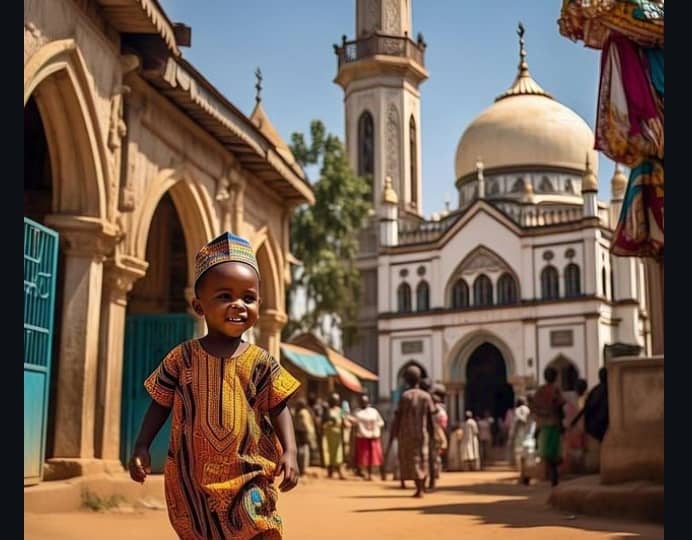
  • Muslims gather in mosques.

  • Traditional worshippers gather in shrines.

MAIN CONTENT: PLACES OF RELIGIOUS WORSHIP IN NIGERIA

Religion Place of Worship Description
Christianity Church A building where Christians gather to pray, sing, and listen to the Bible.
Islam Mosque A place where Muslims pray five times daily, usually facing Mecca.
Traditional African Religion Shrine A sacred space where people offer sacrifices and communicate with their ancestors.
Others (e.g. Hinduism, Buddhism – not common) Temple Buildings used by minority religious groups in some parts of Nigeria

Step 3: Learner Contributions

The teacher now asks students about their experiences:

  • “Where do you go when you pray with your family?”

  • “What’s the name of the place where people gather for worship in your area?”

Teacher’s Response:
“Yes! A church is for Christians, a mosque is for Muslims, and a shrine is for traditional worshippers. But no matter where people worship, it’s important to respect them.”


Classroom Activities

  • Activity 1: Show pictures of a church, mosque, and shrine. Let students identify and describe each one.

  • Activity 2: Have students draw a picture of their own place of worship, whether at home or in the community.

  • Activity 3: Engage the class in a discussion on why people from different religions should respect each other’s places of worship.


Teacher’s Activities

  • Share stories from the community about people going to church, mosque, or shrine.

  • Explain why places of worship are important to each religion.

  • Display and describe pictures of different places of worship.


Learners’ Activities

  • Share personal stories about their family’s place of worship.

  • Draw and describe a place of worship.

  • Participate in the class discussion on respect for other religions.


Assessment

  • Oral questioning: “What do we call the place where Muslims worship?”

  • Visual assessment: Students point to the pictures and correctly identify each place.

  • Group activity: Students group up to create a mini-drawing of a church, mosque, or shrine.


PART A: Evaluation Fill-in-the-Blank Questions 

  1. Christians worship in a ________.
    a) Mosque b) Shrine c) Church d) Temple

  2. Muslims pray in a ________.
    a) Church b) Mosque c) Shrine d) Hall

  3. Traditional religion followers worship in a ________.
    a) Church b) Mosque c) Shrine d) School

  4. A church is usually led by a ________.
    a) Imam b) Priest c) Chief d) Pastor

  5. A mosque is led by an ________.
    a) Pastor b) Imam c) Priest d) Alpha

  6. People go to ________ to offer sacrifices in traditional religion.
    a) Mosque b) School c) Shrine d) Field

  7. In a mosque, Muslims pray facing ________.
    a) Lagos b) East c) Mecca d) Jerusalem

  8. ________ is the holy book used in Christianity.
    a) Qur’an b) Bible c) Torah d) Book

  9. The traditional place of worship can be found in many ________ areas.
    a) Urban b) Rural c) Industrial d) Market

  10. It is important to ________ all religious places.
    a) Destroy b) Respect c) Mock d) Ignore

Frequently Asked Questions (FAQs)

  1. What do we call the place where Christians pray?

    • Answer: Church.

  2. Why do people go to the mosque?

    • Answer: Muslims go there to pray and worship.

  3. Can you go to a shrine even if you are not a traditional worshipper?

    • Answer: Yes, but always with respect for the beliefs of others.

  4. What do people do in a church?

    • Answer: They pray, sing, and listen to Bible teachings.

  5. What is the Qur’an?

    • Answer: The holy book used by Muslims.

  6. Do all religions worship the same God?

    • Answer: No, but all religions believe in a higher power.

  7. Is it okay to ask questions about other religions?

    • Answer: Yes, it is okay as long as we ask with respect.

  8. What’s the importance of respecting other people’s religion?

    • Answer: Respecting other religions helps us live peacefully together.

  9. Can someone from a different religion visit my church or mosque?

    • Answer: Yes, as long as they respect the practices.

  10. Why is the mosque cleaned before prayers?

    • Answer: Muslims believe the mosque must be clean before they pray, as cleanliness is important in their faith.


Conclusion

The lesson ends with a heartfelt reminder from the teacher:
“Wherever you find yourself—whether at church, mosque, or shrine—remember that the place is holy to someone. Our differences in worship should not divide us but rather unite us in respect and understanding. Let’s go out today with kindness, knowing that we can learn a lot from each other’s beliefs.”

More Primary 1 Lesson Plans You’ll Love

  • Rights of Citizens Vocational Aptitude Primary 1 Third Term Lesson Notes
  • Meaning and Types of Citizenship Primary 1 Vocational Aptitude
  • Retail vs. Wholesale: A Powerful Introduction to Trade for Primary 1

Call to Action (CTA):

Looking for more culturally grounded and emotionally rich lesson plans?
Explore our Teaching Tips & Guides section for resources that help you teach with impact.

Share

Related posts:

  1. Gardening Tools for Kids: Names, Uses, and Fun Stories for Learning
  2. Agriculture for Kids: The Meaning, Types, and Why It Matters More Than Ever”
  3. From Farm to Plate: Teaching Kids About Agricultural Produce in Primary 1
  4. Primary 1 Vocational Aptitude Third Term Exam Questions | Weeks 2–11 Summary
  5. What Is Work? – Week 1 Primary 1 Vocational Aptitude Lesson Note
Primary School Lesson Plans Tags:Primary 1, Third Term Lesson, Vocational Aptitude

Post navigation

Previous Post: Rights of Citizens Vocational Aptitude Primary 1 Third Term Lesson Notes
Next Post: Gardening Tools for Kids: Names, Uses, and Fun Stories for Learning

Related Posts

  • Best Ways to Manage Farm Animals (Feeding, Records, & Sanitation)
    Best Ways to Manage Farm Animals (Feeding, Records, & Sanitation) Primary School Lesson Plans
  • Human Circulatory System
    The Human Circulatory System for Primary 6 | Blood and Blood Vessels Lesson Primary School Lesson Plans
  • THIRD TERM SCHEME OF WORK for JSS1, JSS2, and JSS3 Primary School Lesson Plans
  • Plumbing and Fittings Vocational Aptitude Primary 1 Second Term Week 5
    Plumbing and Fittings Vocational Aptitude Primary 1 Second Term Week 5 Primary School Lesson Plans
  • The Hospital: Meaning, People, and Equipment Vocational Aptitude Primary 1
    The Hospital: Meaning, People, and Equipment Vocational Aptitude Primary 1 Primary School Lesson Plans
  • Some Examples of Vocations and their Professionals Primary 1
    Some Examples of Vocations and their Professionals Primary 1 Primary School Lesson Plans

Leave a Reply Cancel reply

Your email address will not be published. Required fields are marked *

Top Posts

  • Best Ways to Manage Farm Animals (Feeding, Records, & Sanitation)
  • Rearing of Farm Animals – Primary 5 Lesson Note (Third Term)
  • PHE JSS 3 Third Term Exam Questions (Objective & Theory)
  • Common Pests & Parasites of Farm Animals – Primary 5 Lesson
  • Prayer Lesson Note Nursery 1 Christian Religious Studies

Recent Posts

  • Primary 1 Third Term Examination Questions
  • JSS 3 Basic Technology Third Term Scheme of Work (Lagos State Curriculum)
  • THIRD TERM SCHEME OF WORK for JSS1, JSS2, and JSS3
  • Nursery 1 Civic Education Social Activities
  • Nursery 1 Civic Education Third Term Revision of Good Behaviour

Lessons Habitat

  • About Us
  • Privacy Policy
  • Contact Us
  • Disclaimer
  • Terms and Conditions
  • FAQs

Categories

Search

Search This Site

  • Why Every School Must Start an Online Learning Platform Before 2026
    Why Every School Must Start an Online Learning Platform Before 2026 Teaching Tips and Guides
  • Colour
    What is a Computer? – Primary 1 Information Technology Lesson Primary 1 Scheme of Work
  • woman, brunette, face, hat, head, portrait, sun hat, young woman, hairstyle, curly hair, sun protection, fashion, model, modeling, woman, woman, woman, brunette, face, face, face, hat, hat, hat, hat, sun hat, sun hat, hairstyle, curly hair, sun protection, sun protection, sun protection, sun protection, sun protection, fashion
    Hat-Making Lesson Plan for Primary 5 | Meaning, Types & Materials Primary 5 Scheme of Work
  • Primary 5 Agricultural Science Lesson Note First Term Review of Primary 4
    Primary 5 Agricultural Science Lesson Note First Term Review of Primary 4 Primary School Lesson Plans
  • A place I would like to visit composition for Primary 5
    A place I would like to visit composition for Primary 5 Primary 5 Scheme of Work
  • Rearing Farm Animals: Methods, Importance, and Systems Explained
    Rearing Farm Animals: Methods, Importance, and Systems Explained Primary School Lesson Plans
  • First Term Exam Vocational Aptitude Primary 1
    First Term Exam Vocational Aptitude Primary 1 Primary School Lesson Plans
  • Importance of Music Vocational Aptitude Primary 1
    Importance of Music Vocational Aptitude Primary 1 Primary School Lesson Plans

Copyright © 2026 Lessons Habitat.

Powered by PressBook News WordPress theme

This website uses cookies to improve your experience. We'll assume you're ok with this, but you can opt-out if you wish. Read More

Decline Cookie Settings
Accept
Powered by WPLP Compliance Platform
Cookies are small text files that can be used by websites to make a user's experience more efficient. The law states that we can store cookies on your device if they are strictly necessary for the operation of this site. For all other types of cookies we need your permission. This site uses different types of cookies. Some cookies are placed by third party services that appear on our pages.
  • Necessary
    Always Active
    Necessary cookies help make a website usable by enabling basic functions like page navigation and access to secure areas of the website. The website cannot function properly without these cookies.

  • Marketing
    Marketing cookies are used to track visitors across websites. The intention is to display ads that are relevant and engaging for the individual user and thereby more valuable for publishers and third party advertisers.

  • Analytics
    Analytics cookies help website owners to understand how visitors interact with websites by collecting and reporting information anonymously.

  • Preferences
    Preference cookies enable a website to remember information that changes the way the website behaves or looks, like your preferred language or the region that you are in.

  • Unclassified
    Unclassified cookies are cookies that we are in the process of classifying, together with the providers of individual cookies.

Powered by WPLP Compliance Platform
Cookie Settings