


Skip to content

Lessons Habitat

Lesson Plans & Teaching Resources for Educators

  • About Us
  • Privacy Policy
  • Contact Us
  • Disclaimer
  • Terms and Conditions
  • FAQs
  • Toggle search form
  • Musical Instruments in Nigerian Celebrations: Types, and Uses
    Musical Instruments in Nigerian Celebrations: Types, and Uses Primary School Lesson Plans
  • What Is Work? – Week 1 Primary 1 Vocational Aptitude Lesson Note
    What Is Work? – Week 1 Primary 1 Vocational Aptitude Lesson Note Primary School Lesson Plans
  • Colour
    Phonics Practice: Using His and Her – Synonyms, Antonyms & Homophones | Lessonshabitat Primary 1 Scheme of Work
  • Best Ways to Manage Farm Animals (Feeding, Records, & Sanitation)
    Best Ways to Manage Farm Animals (Feeding, Records, & Sanitation) Primary School Lesson Plans
  • Why Every School Must Start an Online Learning Platform Before 2026
    Why Every School Must Start an Online Learning Platform Before 2026 Teaching Tips and Guides
  • A place I would like to visit composition for Primary 5
    A place I would like to visit composition for Primary 5 Primary 5 Scheme of Work
  • Screenshot 20250412 235956
    Electrical Home Appliances Vocational Aptitude Primary 1 Primary School Lesson Plans
  • blackboard, learn, language, language school, chalk, text, chalkboard, education, school, student, word, communication, english, elementary, course, learning, studying, classroom, gray school, gray education, gray learning, gray study, gray classroom, gray community, gray communication, gray studying, gray language, gray blackboard, language, language, language, language, language
    Parts of Speech English Grammar Primary 6 Primary School Lesson Plans
The Tailor – Primary 1 Vocational Aptitude Week 4 Lesson Note

The Tailor – Primary 1 Vocational Aptitude Week 4 Lesson Note

Posted on 15/04/202515/04/2025 By LessonsHabitat No Comments on The Tailor – Primary 1 Vocational Aptitude Week 4 Lesson Note

Subject: Vocational Aptitude

Class: Primary 1

Term: Second Term

Week: 4

Age: 5–6 years

Topic: Occupations in Our Community

Sub-topic: The Tailor – Who They Are, What They Do, and Tools They Use

Duration: 45 minutes


Introductory Story (From the Teacher’s Lens)

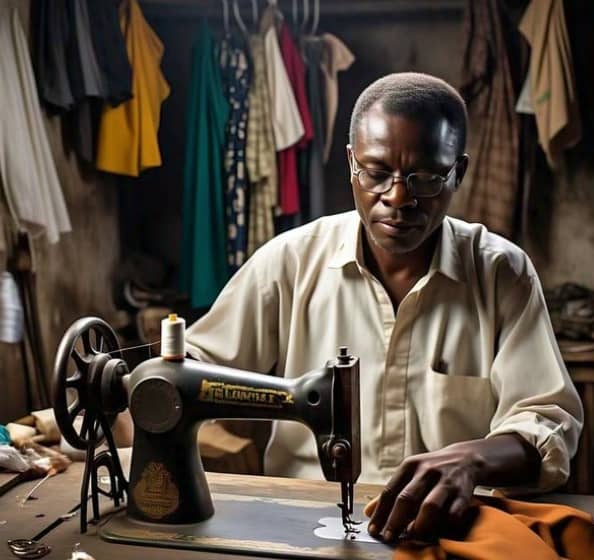
I remember standing in Mama Tolu’s small tailoring shop one rainy morning, watching her pedal that old sewing machine with such rhythm you’d think it was music. Her hands moved fast—snipping, folding, pinning—and all around her were boys and girls like my pupils, huddled in uniform pieces and church clothes waiting to be “adjusted.”

Table of Contents

Toggle
  • Subject: Vocational Aptitude
  • Class: Primary 1
  • Term: Second Term
  • Week: 4
  • Age: 5–6 years
  • Topic: Occupations in Our Community
  • Sub-topic: The Tailor – Who They Are, What They Do, and Tools They Use
  • Duration: 45 minutes
  • Introductory Story (From the Teacher’s Lens)
  • Behavioral Objectives
  • Key Terms and Definitions
  • Set Induction (Real Classroom Moments)
  • Entry Behavior
  • Learning Materials and Resources
  • Background Knowledge
  • Embedded Core Skills
  • Main Content
    • 1. Who is a Tailor?
    • 2. What Does a Tailor Do?
    • 3. Tools Tailors Use
    • 4. Where Do Tailors Work?
  • Classroom Story (Mini Case Study)
  • Classroom Discussion
  • Activity – Fill-in-the-Blank (Multiple Choice)
  • Theory Questions
  • Teacher’s Role
  • Pupils’ Role
  • Assessment (Games & Interaction)
  • Conclusion (Reflective & Inspirational)
  • Linking To Other Lessons 
    • Related posts:

That day, Tolu whispered, “My mummy sews everybody’s agbada and ankara. She’s a tailor!” And that was the spark. A teachable moment was born.

So when I teach this lesson, it’s not just about jobs—it’s about dignity. It’s about the art, the hustle, and the thread that ties our communities together. Tailors don’t just sew fabric—they stitch identity.


Behavioral Objectives

By the end of this lesson, pupils should be able to:

  1. Say who a tailor is in their own words.

  2. List at least 3 things tailors sew.

  3. Identify common tools tailors use.

  4. Talk about the role tailors play in the community.

  5. Appreciate tailors as important professionals, not just “mummy’s emergency fixers.”


Key Terms and Definitions

  • Tailor: A person who sews and repairs clothes.

  • Sewing Machine: A machine used to stitch clothes.

  • Needle and Thread: Tools for sewing by hand.

  • Scissors: Used to cut cloth.

  • Tape Rule: Measures body size.

  • Fabric: The cloth used to make clothes.


Set Induction (Real Classroom Moments)

Teacher: “Children, who stitched your school uniform?”
Ireti: “My mummy said one tailor sewed it, but she made it tight!”
Chidi: “Me, my grandma is a tailor. She sewed my church native!”
Teacher (smiling): “So tailors are not just clothes people—they are fashion heroes! Let’s talk about them today…”


Entry Behavior

Many children have seen tailors at home or in shops. Some have even watched their uniforms or party clothes being sewn or mended. We’ll build on those familiar experiences.


Learning Materials and Resources

  • Real or toy sewing machine

  • Fabric samples (ankara, lace, school uniform)

  • Needles, thread, scissors

  • Measuring tape

  • Picture chart of a tailor’s shop

  • Chalkboard sketches of tailor tools


Background Knowledge

In previous weeks, we looked at mechanics and plumbers—people who fix cars and water. This week, we focus on a more familiar profession that dresses the whole community.


Embedded Core Skills

  • Appreciation of local work

  • Identification of tools

  • Communication and description

  • Community interaction

  • Creativity and imagination


Main Content

1. Who is a Tailor?

A tailor is someone who sews clothes for people. Tailors can make new clothes, fix old ones, or change the size of clothes.

2. What Does a Tailor Do?

  • Sews school uniforms, native wear, shirts, trousers, etc.

  • Repairs torn clothes

  • Makes clothes fit better

  • Designs clothes for parties, weddings, and special days

3. Tools Tailors Use

  • Sewing Machine – for fast stitching

  • Needle and Thread – for small or quick sewing

  • Scissors – for cutting fabric

  • Tape Rule – for measuring body parts

  • Chalk – for marking lines

  • Pins – for holding cloth before sewing

4. Where Do Tailors Work?

Tailors work in small shops, markets, homes, or kiosks. Some even come to your house—like Mama Funke who sews under the mango tree!


Classroom Story (Mini Case Study)

Uche had a wedding to attend with his mum. But the day before, his native cloth was still untouched. “Mummy, my cloth o!” he cried. They rushed to the tailor, Aunty Bisi, who was sitting by her machine. “No fear,” she smiled. “I will finish it before you blink.” By evening, Uche was shining in his blue agbada. Everyone called him “small chairman.”

Moral? Tailors save the day.


Classroom Discussion

Teacher: “Who has seen a tailor before?”
Pupils: “Meeeee!”
Teacher: “Where do tailors work?”
Chiamaka: “In shop… behind my house!”
Teacher: “What do they use to sew clothes?”
Emmanuel: “Needle and machine and thread!”
Teacher: “Can we wear fine clothes without tailors?”
Pupils: “Nooooo!”
Teacher: “So we must always thank them!”


Activity – Fill-in-the-Blank (Multiple Choice)


Choose the correct answer:

  1. A tailor works with ____.
    a. books
    b. thread
    c. food
    Answer: b

  2. Tailors sew ____.
    a. rice
    b. beds
    c. clothes
    Answer: c

  3. A tailor uses a ____ to cut fabric.
    a. spoon
    b. scissors
    c. pencil
    Answer: b

  4. Clothes are made from ____.
    a. paper
    b. fabric
    c. sand
    Answer: b

  5. The tool used to measure the body is ____.
    a. fork
    b. tape rule
    c. ruler
    Answer: b


Theory Questions

  1. Who is a tailor?

  2. What do tailors do in our community?

  3. Name 3 tools used by tailors.

  4. What kind of clothes can a tailor sew?

  5. Why are tailors important in our lives?


Teacher’s Role

  • Show tools and name each one

  • Explain the importance of tailors

  • Engage pupils with real examples

  • Encourage classroom storytelling

  • Lead role-play of a tailor at work


Pupils’ Role

  • Share experiences of seeing tailors

  • Answer questions about tools and clothes

  • Play the role of tailor and customer

  • Point to pictures or real tools

  • Sing tailor songs and chants


Assessment (Games & Interaction)

  • Pupils act like tailors and “measure” each other

  • Matching game (tool → use)

  • Quiz: “What tool is this?”

  • Singing: “Sew me my cloth oh tailor, tailor, tailor…”


Conclusion (Reflective & Inspirational)

Every stitch a tailor makes is a symbol of care. Our children must learn that community work is noble—from the lawyer to the seamstress. We don’t just wear clothes, we wear the love and labor of our neighbors.

Let’s raise a generation that respects all hands that serve—whether on chalkboards or sewing tables. Tailors are not background workers—they’re backbone workers.

Linking To Other Lessons 

  1. Link to Week 3 Lesson Note:
    Anchor text: “In last week’s lesson, we explored the role of plumbers and their tools.“

  2. Link to Vocational Aptitude Category Page:
    Anchor text: “See all Vocational Aptitude lesson notes for Primary 1 here.”

  3. Link to First Term Lessons (revision or back-reference):
    Anchor text: “You can also revisit our first term lessons on examples of vacation .”

Share

Related posts:

  1. Revision of First Term Topics Vocational Aptitude Primary 1
  2. The Hospital: Meaning, People, and Equipment Vocational Aptitude Primary 1
  3. Mechanic Workshop – Primary 1 Vocational Aptitude Week 3 Lesson Notes
  4. Plumbing and Fittings Vocational Aptitude Primary 1 Second Term Week 5
  5. Occupations in Our Community – The Carpenter Vocational Aptitude Primary 1
  6. The Bricklayer – Vocational Aptitude Primary 1, Second Term, Week 7
  7. The Electrician Vocational Aptitude Primary 1 Second Term Lesson Notes 9
  8. The Painter: Vocational Aptitude Lesson Note for Primary 1 Second Term
  9. The Interior Decorator: Vocational Aptitude Lesson Note for Primary 1
  10. Primary 1 Second Term Exam – Vocational Aptitude | Lessons Habitat

Primary School Lesson Plans Tags:Second Term Lesson Notes, Vocational Aptitude

Post navigation

Previous Post: Plumbing and Fittings Vocational Aptitude Primary 1 Second Term Week 5
Next Post: Occupations in Our Community – The Carpenter Vocational Aptitude Primary 1

Related Posts

  • Agricultural Science Primary 5 Third Term Examination Questions
    Agricultural Science Primary 5 Third Term Examination Questions Primary School Lesson Plans
  • The Hospital: Meaning, People, and Equipment Vocational Aptitude Primary 1
    The Hospital: Meaning, People, and Equipment Vocational Aptitude Primary 1 Primary School Lesson Plans
  • Common Pests & Parasites of Farm Animals – Primary 5 Lesson
    Common Pests & Parasites of Farm Animals – Primary 5 Lesson Primary School Lesson Plans
  • Mechanic Workshop – Primary 1 Vocational Aptitude Week 3 Lesson Notes
    Mechanic Workshop – Primary 1 Vocational Aptitude Week 3 Lesson Notes Primary School Lesson Plans
  • blackboard, learn, language, language school, chalk, text, chalkboard, education, school, student, word, communication, english, elementary, course, learning, studying, classroom, gray school, gray education, gray learning, gray study, gray classroom, gray community, gray communication, gray studying, gray language, gray blackboard, language, language, language, language, language
    Parts of Speech English Grammar Primary 6 Primary School Lesson Plans
  • Introduction to Home Economics (Primary 1 – Vocational Aptitude
    Introduction to Home Economics (Primary 1 – Vocational Aptitude Primary School Lesson Plans

Leave a Reply Cancel reply

Your email address will not be published. Required fields are marked *

Recent Posts

  • Primary 4 Letter Writing Lesson Notes – Simple and Effective Learning
  • Primary 4 English Grammar Revision – Clear and Confident Learning
  • Singular and Plural of Nouns for Primary 6 | Grammar Lesson
  • Types of Nouns for Primary 6 | English Grammar Lesson Notes
  • Parts of Speech English Grammar Primary 6
  • Basic Science JSS 3 Parts of the Eyes
  • Adverbs Made Easy: Features, Position & Functions
  • Conjunctions in English Grammar JSS 3 Lesson Note
  • Solving Equations With Fractions for JSS 3 | Lessonshabitat
  • Hat-Making Lesson Plan for Primary 5 | Meaning, Types & Materials

Categories

  • Agricultural Science
  • Basic Science
  • English Grammar Primary 1
  • English Grammar Primary 5
  • Mathematics
  • Primary 1 Scheme of Work
  • Primary 1 Social Studies
  • Primary 5 Scheme of Work
  • Primary School Lesson Plans
  • Teaching Tips and Guides

Lessons Habitat

  • About Us
  • Privacy Policy
  • Contact Us
  • Disclaimer
  • Terms and Conditions
  • FAQs

Search

  • Importance of Farming Vocational Aptitude Primary 1 Third Term
    Importance of Farming Vocational Aptitude Primary 1 Third Term Primary School Lesson Plans
  • Meaning of Soil, How Soils Are Formed, and Factors of Soil Formation
    Meaning of Soil, How Soils Are Formed, and Factors of Soil Formation Agricultural Science
  • Whole Numbers under Tens and Units – Primary 1 Mathematics Lesson Note (Second Term Week 9)
    Whole Numbers under Tens and Units – Primary 1 Mathematics Lesson Note (Second Term Week 9) Primary 1 Scheme of Work
  • Why Every School Must Start an Online Learning Platform Before 2026
    Why Every School Must Start an Online Learning Platform Before 2026 Teaching Tips and Guides
  • Pollination, Fertilization, Budding, and Coloration
    Pollination, Fertilization, Budding, and Coloration Primary School Lesson Plans
  • Importance of Water for Kids – Primary 1 BST Lesson Plan
    Importance of Water for Kids – Primary 1 BST Lesson Plan Primary 1 Scheme of Work
  • Maximizing Third Term School Events for Growth and Engagement
    Maximizing Third Term School Events for Growth and Engagement Teaching Tips and Guides
  • Skip Counting Numbers from 1 to 130 (Primary 1 Lesson Note)
    Skip Counting Numbers from 1 to 130 (Primary 1 Lesson Note) Primary 1 Scheme of Work

Copyright © 2026 Lessons Habitat.

Powered by PressBook News WordPress theme

This website uses cookies to improve your experience. We'll assume you're ok with this, but you can opt-out if you wish. Read More

Decline Cookie Settings
Accept
Powered by WPLP Compliance Platform
Cookies are small text files that can be used by websites to make a user's experience more efficient. The law states that we can store cookies on your device if they are strictly necessary for the operation of this site. For all other types of cookies we need your permission. This site uses different types of cookies. Some cookies are placed by third party services that appear on our pages.
For more information on how Google's third party cookies operate and handle your data, see: Google's Privacy Policy
  • Necessary
    Always Active
    Necessary cookies help make a website usable by enabling basic functions like page navigation and access to secure areas of the website. The website cannot function properly without these cookies.

  • Marketing
    Marketing cookies are used to track visitors across websites. The intention is to display ads that are relevant and engaging for the individual user and thereby more valuable for publishers and third party advertisers.

  • Analytics
    Analytics cookies help website owners to understand how visitors interact with websites by collecting and reporting information anonymously.

  • Preferences
    Preference cookies enable a website to remember information that changes the way the website behaves or looks, like your preferred language or the region that you are in.

  • Unclassified
    Unclassified cookies are cookies that we are in the process of classifying, together with the providers of individual cookies.

Powered by WPLP Compliance Platform
Cookie Settings